
The Anatomy of Betrayal
Decoding the Capture Narrative of Nicolás Maduro
04 Jan, 2026
Share
Save
In the annals of modern international politics, the alleged capture of Venezuelan President Nicolás Maduro in early 2026 stands as a remarkable case study of geopolitical tension, high-stakes coercion, and the instrumentalisation of betrayal. The United States’ public offer of a $50 million bounty on Maduro, the largest such reward in recent memory for a sitting head of state, invites scrutiny not only into the operational logistics of regime targeting but also into the human psychology of loyalty, fear, and opportunism.
This discourse seeks to decode the multi-layered dynamics of betrayal, asking a central question: Who, if anyone, enabled Maduro’s alleged capture, and why? Using analytical, historical, and philosophical frameworks, we examine the interplay between external coercion, internal loyalty, and the performative aspects of modern political power.
The Bounty as a Mechanism of Power
From a political and legal standpoint, the U.S. bounty functions as both a carrot and a threat. Historically, rewards for capturing leaders accused of criminal or terrorist activity operate on two levels:
Material Incentive: Monetary reward to incentivise insiders to defect or supply actionable intelligence.
Psychological Pressure: A signal to the regime that loyalty comes at a cost; every inner-circle member becomes a potential liability.
The $50 million figure, unprecedented in magnitude, elevates the bounty from a legal tool into a strategic instrument of coercive diplomacy. It represents not just a reward but a psychological weapon, designed to test the limits of loyalty within Maduro’s network.
The Myth and Reality of Betrayal
Much of the popular discourse around Maduro’s alleged capture assumes a single act of betrayal, often attributed to an insider enticed by the U.S. bounty. However, evidence remains elusive:
Investigative reporting indicates that U.S. operatives attempted to recruit Maduro’s chief pilot, offering substantial compensation to facilitate a defection or diversion. The pilot ultimately did not cooperate, highlighting the tension between opportunity and risk in authoritarian contexts.
No confirmed insider has been publicly identified as having actively betrayed Maduro, leading directly to his capture. Claims of betrayal are therefore speculative or performative, often amplified for political purposes by either U.S. officials or Maduro’s supporters.
Philosophically, this raises the notion of betrayal as narrative, not merely fact. Betrayal becomes a tool for constructing a story of vulnerability and inevitability—an essential element in both psychological warfare and public diplomacy.
Structural Determinants of Loyalty
Understanding why betrayal is rare or difficult requires examining Venezuelan power structures:
Military Control: Maduro’s regime relies heavily on a loyalised military hierarchy, reinforced by patronage networks and ideological training. Loyalty is materially rewarded but ideologically reinforced, making simple financial inducements insufficient.
Political Surveillance: High-ranking officials operate under constant surveillance; defecting carries existential risk, including imprisonment, extrajudicial retaliation, or threats to family members.
External Support: Cuba, Russia, and other allied states provide security guarantees that complicate defections. This external scaffolding stabilises the inner circle against external enticements.
From a sociological perspective, loyalty in authoritarian regimes is not merely contractual; it is embedded in a network of fear, ideology, and mutual dependency. The risk/reward calculus is far more complex than any bounty can encapsulate.
The Strategic Function of the Betrayal Narrative
Why then is the betrayal narrative so persistent? Its utility is manifold:
Domestic Messaging: Within Venezuela, allegations of insider betrayal can serve to rally remaining loyalists, framing the leader as under siege from both within and without, thereby reinforcing cohesion among trusted allies.
International Legitimacy: For the United States and allied actors, framing capture as a result of betrayal suggests a legally and morally justified mechanism, rather than a unilateral military abduction.
Psychological Leverage: Even the potential for betrayal imposes internal tension, eroding trust within Maduro’s inner circle, a form of strategic destabilisation without direct violence.
In effect, the narrative of betrayal functions as a tool of perception management, often as potent as physical operations themselves.
Ethical and Legal Considerations
From an academic standpoint, the operation raises profound questions:
Sovereignty and International Law: Offering a bounty on a sitting head of state, while legally justified under U.S. narcotics law, challenges norms of sovereignty and non-intervention, creating a legal grey zone.
Moral Philosophy: The deliberate incentivisation of betrayal confronts traditional ethical frameworks: does the end (removal of a criminalised leader) justify the means (enticing disloyalty within a government)?
Precedent Setting: A successful capture facilitated by betrayal could normalise bounties as a tool of regime change, fundamentally altering international political behaviour.
These dilemmas highlight that the issue is not merely operational but normatively and ethically complex, demanding scrutiny from scholars of law, ethics, and political science.
Analytical Synthesis
The capture narrative illustrates the intersection of psychology, power, and geopolitics:
Material Incentives Alone Are Insufficient: Bounties function as amplifiers of pre-existing dissatisfaction but cannot override entrenched fear and loyalty networks.
Betrayal Is Rarely Singular: Most defections occur incrementally, through networks of minor leaks, intelligence sharing, or staged absences, rather than dramatic acts.
Narratives Shape Reality: Claims of betrayal often precede verification, serving strategic and symbolic purposes in international relations.
From an academic lens, the story of Maduro’s capture—or its anticipation—is less about a discrete act of treachery and more about the systemic pressures that erode authoritarian cohesion over time.
Conclusion
Decoding the alleged betrayal of Nicolás Maduro exposes a complex web of coercion, loyalty, and strategic narrative. While popular accounts focus on dramatic acts of defection, the evidence suggests that:
Direct betrayal remains unverified.
The bounty served primarily as a tool of psychological warfare and international signalling.
Any capture would likely result from a combination of external pressure, systemic weakness, and opportunistic defections over time.
Academically, the case exemplifies the limits of monetary incentives in authoritarian contexts, the power of narrative in shaping international perception, and the enduring interplay between law, ethics, and geopolitics. Betrayal, in this sense, is as much an analytic construct as a historical fact—a lens through which the vulnerabilities of power can be studied, predicted, and understood.
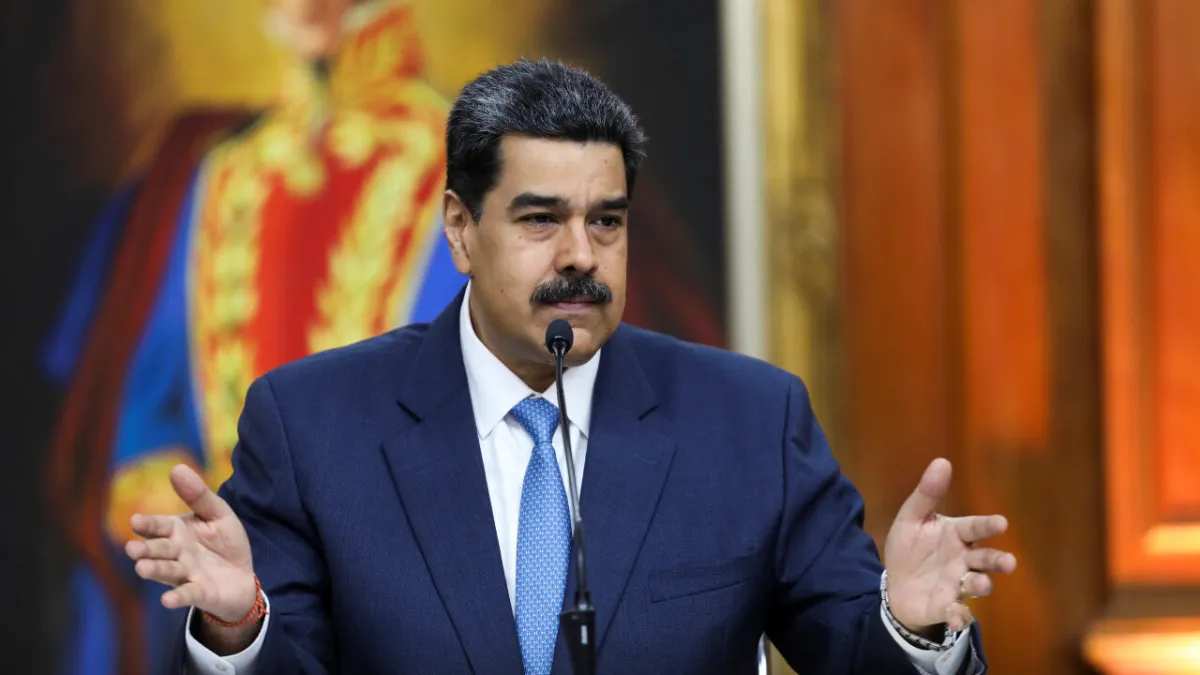
Photo Credit: France 24




.webp)